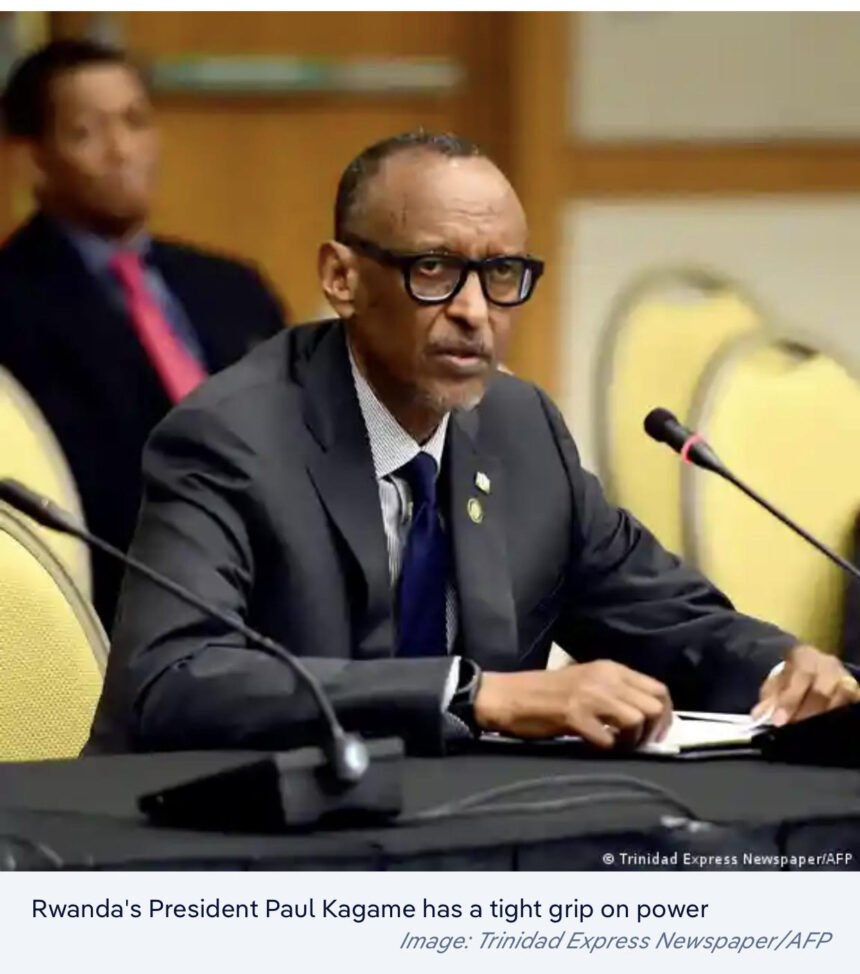
A suggestion by a top German politician to send refugees to Rwanda put the African country in the spotlight again. Here’s what you need to know about President Paul Kagame, Rwanda and what it’s like for refugees there.
What’s this about Germany sending refugees to Rwanda?
In an interview published on December 17, German politician Jens Spahn, a member of the opposition center-right Christian Democrats, floated the idea of sending asylum seekers to Rwanda for processing, similar to the model proposed by Britain.
Spahn’s suggestion was immediately dismissed by Germany‘s foreign minister Annalena Baerbock, who called the idea “downright childishly naive” during a visit to Rwanda on Monday.
But the suggestion shows how the idea of offshore processing is gaining traction. It also underlines Rwanda’s success in positioning itself as an international haven for asylum seekers.
Here’s what you need to know about Rwanda’s government, economy, human rights situation and refugee policy.
What is Rwanda’s government like?
President Paul Kagame and the Rwandan Patriotic Front (RPF) have ruled Rwanda, a small East African nation dominated by rugged mountains and fertile plains, since the end of the 1994 genocide.
On paper, the country is a multiparty democracy. But political opposition is “nonexistent,” as the US development agency USAID puts it.
Kagame’s three election victories have been plagued by numerous and credible accusations of irregularities, including vote rigging and intimidation. Officially, he won the 2017 presidency with 99% of the vote.
The nation is designated an “electoral autocracy” by the Varieties of Democracy Project, an international democracy database. And it earned only eight out of 40 possible points for political rights in the 2023 Freedom in the World report.
What about other rights and freedoms in Rwanda?
Rwanda has ratified international and regional instruments guaranteeing human rights, which are also anchored in its constitution and other national laws.
But several observers have identified significant rights issues in Rwanda, including extrajudicial killings, people being disappeared by the government and torture of dissenters.
This has had a chilling effect on freedom of expression and association by perpetuating “a culture of intolerance of dissent,” finds Human Rights Watch.
As for media freedom, “beaten down by decades of oppression, the Rwandan media landscape is one of the poorest in Africa,” says Reporter without Borders, which ranks the country 131 out of 180 on its 2023 press freedom index.
Source; DW