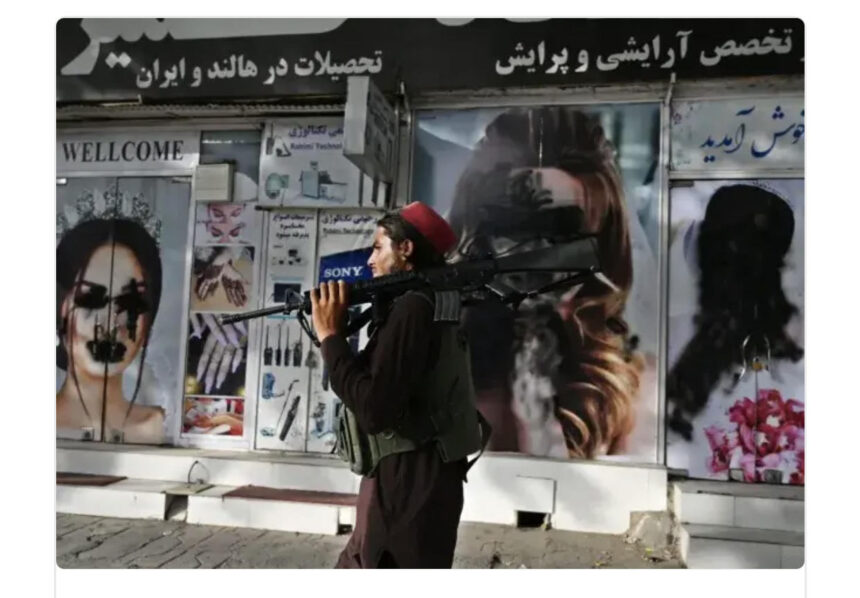
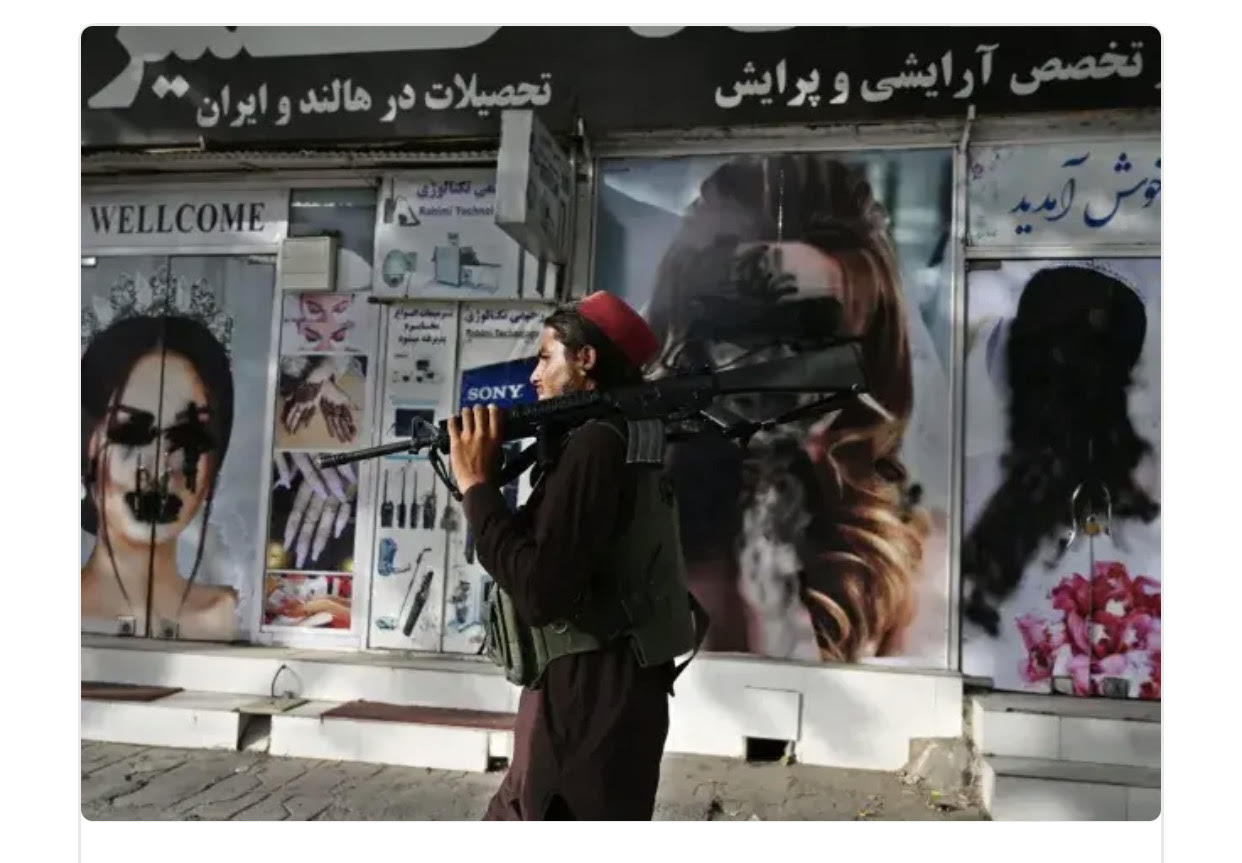
[dropcap]T[/dropcap]he Taliban adminstration has ordered beauty salons to close within a month in the latest restriction faced by women in Afghanistan.
CNN reported : Mohammad Sidik Akif Mahajar, a spokesman for the Ministry for the Propagation of Virtue and Prevention of Vice, confirmed to CNN the order had been given on June 24, with all salons to close by July 27.
Since re-taking control of the country in August 2021, following the shambolic withdrawal of the United States and its allies, the Taliban has rolled back decades of progress on human rights.
In the same vein, the Taliban have also decreed that women should be dressed in a way that only reveals their eyes, and must be accompanied by a male relative if they are travelling more than 72km (48 miles).
According to Vanguard the restrictions have continued despite international backlash and protests by women as well as activists speaking up on their behalf.
Shutting beauty salons was part of a wide range of measures imposed by the Taliban when they were last in power between 1996 and 2001. But they reopened in the years after the 2001 US-led invasion of Afghanistan.
Reacting to the new closure, an Afghan woman speaking anonymously told the BBC: “The Taliban are taking away the most basic human rights from Afghan women.
“They are violating women’s rights. By this decision, they are now depriving women from serving another women. When I heard the news, I was completely shocked.
“It seems the Taliban do not have any political plan other than focusing on women’s bodies. They are trying to eliminate women at every level of public life.”
According to CNN new The UN report released last month was compiled after a week-long visit to Afghanistan by Richard Bennett, the Special Rapporteur on the situation of human rights in Afghanistan, and Dorothy Estrada-Tanck, who led a contingent from the working group on discrimination against women and girls.
According to their report, women are banned from working in most sectors outside the home, and are prohibited from attending public baths, parks, and gyms. They must wear a loose-fitting black garment that covers their face, and they’re not permitted to leave home without reason, and even then not without a male guardian.
Reports of depression and suicide are widespread, the report found, especially among teenage girls who’ve been prevented from pursuing an education. Almost 8% of people surveyed knew a girl or woman who had attempted suicide, the report said.
Restrictions imposed outside the home and economic hardship had resulted in “significant tensions” inside homes and a rise in domestic violence, and there was “notable evidence” of a “significant increase” in forced marriage of girls, the report found.
In an interview published Tuesday, Markus Potzel, the Deputy Special Representative for the UN Assistance Mission, urged Afghanistan’s “de facto authorities” to give girls and women greater freedoms, if they want to attract international aid.
“They should let girls go to university. They should let women work for international NGOs, for national NGOs, and for UN organizations. And they should let women participate in social life,” he said.
“If this happens, I can imagine that Afghanistan would be integrated into the international community again, and international donors would also rethink and probably reinforce engagement with Afghanistan.
“Afghanistan needs international help. And we, as the UN, want to help them help themselves.” from CNN news