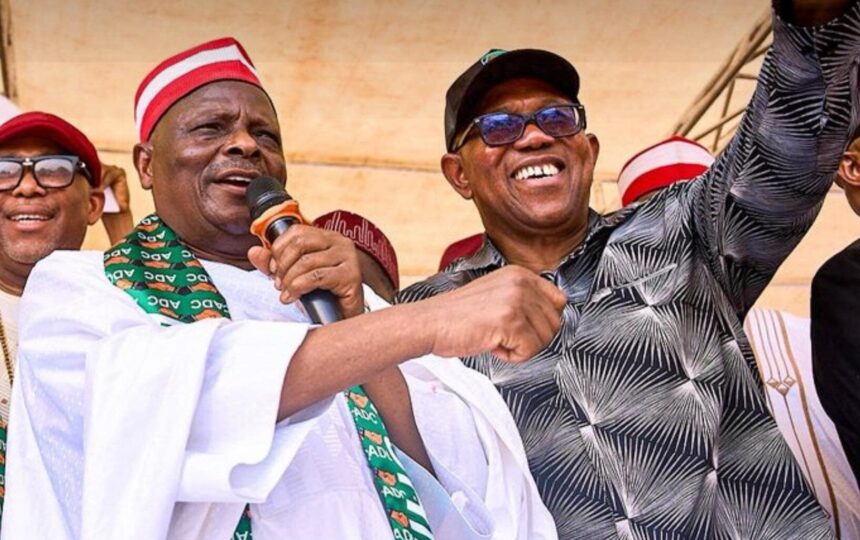
Nigeria’s opposition politics took a dramatic turn as Peter Obi and Rabiu Kwankwaso defected to the National Democratic Congress (NDC)
Their move was followed by 17 members of the House of Representatives leaving the African Democratic Congress (ADC) to join the NDC, boosting its strength in parliament
With a clear leadership structure and growing influence, the NDC is fast becoming a major force in the country’s political landscape
NDC’s growing influence in Nigeria
The National Democratic Congress has been positioning itself as a strong alternative to the ruling party. With the entry of Peter Obi and Kwankwaso, the NDC’s profile has risen significantly, sparking conversations about its potential to reshape voter dynamics.
Kwankwaso joins forces with NDC
Rabiu Kwankwaso, a former governor and influential northern politician, also defected to the NDC. His presence adds weight to the party’s reach in northern Nigeria, strengthening its regional influence. Rabiu Musa Kwankwaso is a Nigerian politician and engineer who has played a central role in Kano State and national politics for over three decades. He is best known for his two terms as Governor of Kano State, his tenure as Minister of Defence, and his grassroots movement known as Kwankwasiyya.
NDC leadership structure
The NDC is led by a team of national officers who play key roles in shaping its direction:
– National Chairman: Sen. Cleopas Moses Zuwoghe
– National Secretary: Barr. Ikenna Morgan Enekweizu
– National Treasurer: Mr John Odey
– National Financial Secretary: Hon. Mainasara Abubakar Sani
– National Legal Adviser: Barr. Reuben Egwuaba
17 representatives defect from ADC to NDC
In addition to Obi and Kwankwaso, the NDC recently welcomed 17 members of the House of Representatives who defected from the African Democratic Congress (ADC). This mass defection further strengthens the party’s presence in the legislature and signals growing momentum for the opposition.